
Plan a Company Outing People Will Actually Join With Excitement

Planning a company outing sounds easy until you actually have to get people excited about joining it.
The management team may want something useful for team bonding. HR may want an activity that is easy to organise and suitable for different types of employees. The event planner may be thinking about schedules, transport, food, documentation, and participant coordination. Meanwhile, employees are asking a much simpler question: “Is this actually going to be fun?”
That question matters.
A company outing can have the perfect schedule, a nice venue, and a long list of activities, but if the experience feels too formal or repetitive, participation can quickly become passive. People show up because they have to, take a few photos, follow the programme, and wait for the day to finish.
A corporate outing Bali experience should aim for something different.
Instead of putting employees in another meeting room or asking them to sit through another structured programme, give them something they can actively participate in. An ATV experience can create that change because people are not simply watching an activity. They are part of it.
At Jambe Asri ATV Adventure, the route combines ATV riding with changing terrain, canyon scenery, three waterfall spots, two real mud pits, Barong Cave, a flying bridge, rice field, water track, and other sections. That variety gives a company group several shared moments instead of one repetitive activity.
The result is an experience that can feel more like an actual outing than an extended office agenda.
Start With What People Will Actually Want to Do
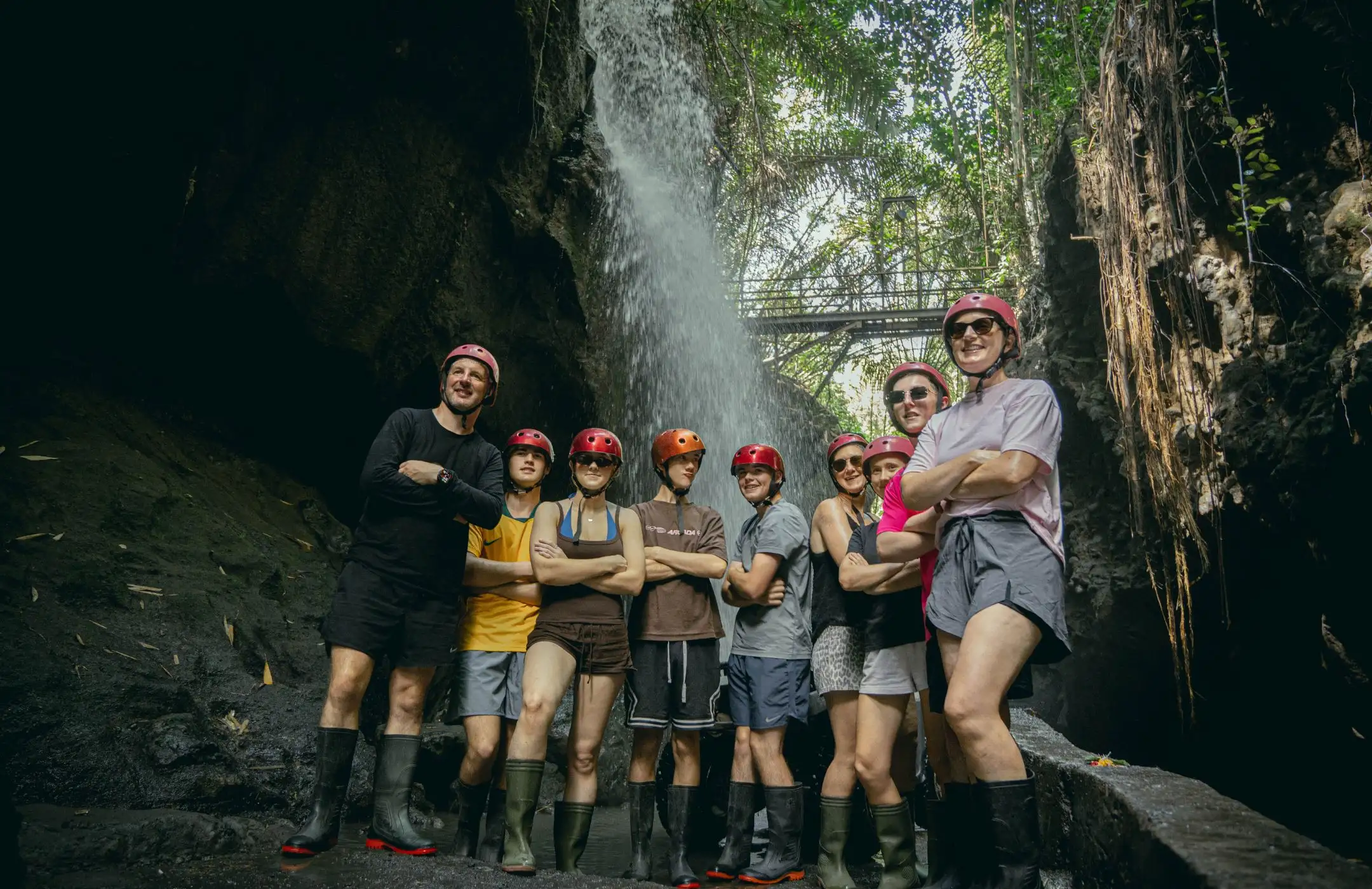
The first step in planning a successful company outing is understanding participation psychology.
Employees have different personalities.
Some people enjoy physical activities immediately. Others are cautious. Some want to take photos. Some are competitive. Others simply want to spend time with colleagues outside the office.
That means the best company activity should not depend on everyone having the same personality.
An ATV experience can work because participation happens at different levels. Some employees may be excited about the route itself. Others may enjoy the social side. Beginners can listen to the briefing, follow the guide, and experience the route according to the operator's instructions.
The goal is not to force everyone to become an adventure enthusiast.
The goal is to give everyone a reason to participate.
Shared Action Creates Better Team Moments
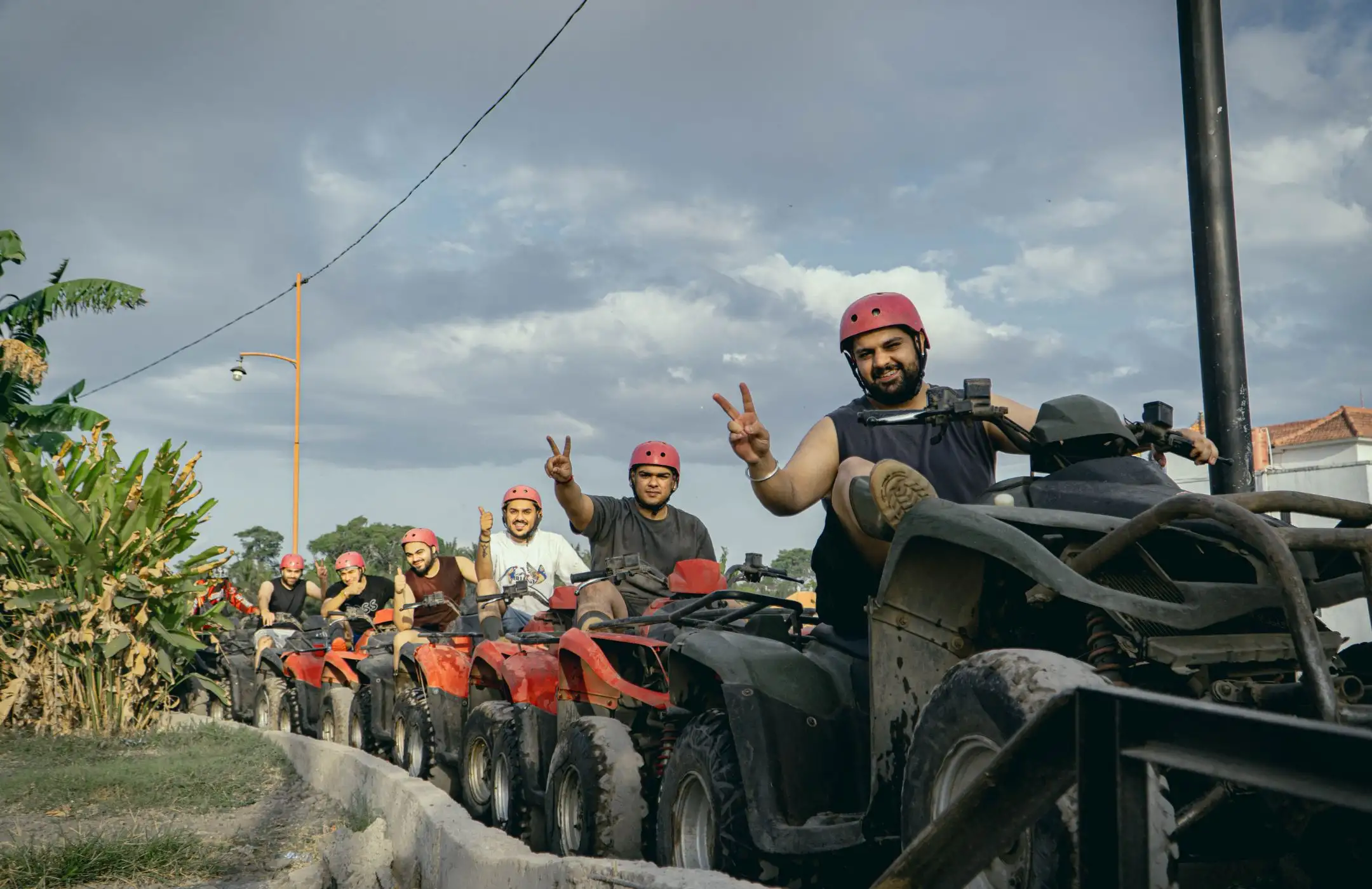
A team-building activity becomes more interesting when employees actually have something to experience together.
An ATV ride creates that naturally.
People prepare together, listen to the briefing, start the route, react to different terrain, and talk about what they have just experienced. The conversation is no longer about work deadlines or office projects.
Someone may laugh after getting muddy.
Someone may be surprised by the canyon.
Someone may have a favourite waterfall section.
Someone else may talk about Barong Cave.
These moments can create informal interaction between colleagues who may not normally work together closely.
That is one reason ATV team building Bali can be a useful concept for companies looking for something more active than a formal team-building session.
The Route Gives the Day a Natural Structure
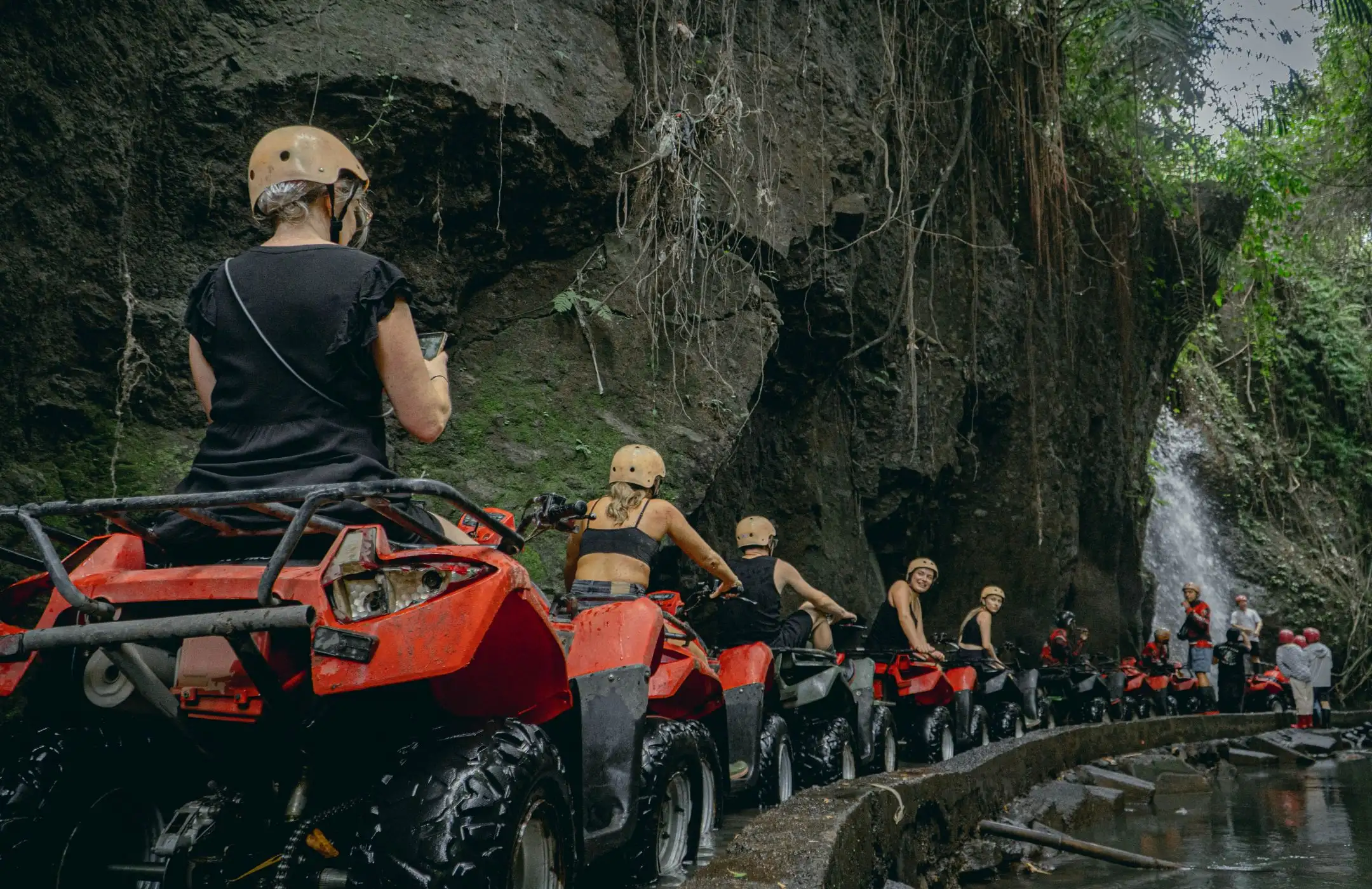
One concern with company outings is that activities can feel disconnected.
First there is a game.
Then a speech.
Then lunch.
Then another game.
Then a group photo.
The day can start feeling like a checklist.
An ATV route offers a more natural structure because the experience itself provides the progression.
Jambe's route includes different terrain and several signature sections, including a canyon, three waterfall spots, two real mud pits, Barong Cave, and a flying bridge. The exact order of these sections should be confirmed with the operator rather than assumed, but the variety itself creates several different moments within the experience.
That makes the activity easier to build into a company programme.
The ATV session becomes the main shared experience, while transport, food, documentation, and other activities can be arranged around it where available.
Beginners Should Not Be Left Out

One of the biggest concerns when organising a company outing is whether everyone can participate.
Not every employee will have ridden an ATV before.
That should not automatically become a problem.
A beginner can be introduced to the experience through the operator's briefing and guidance. The important thing is to make sure participants understand the requirements and follow the instructions provided on the day.
Jambe's product positioning includes beginner-friendly communication, briefing, guide support, and safety equipment as important parts of the experience.
However, companies should not assume that every employee is automatically eligible. Age, health, riding, passenger, and other operational requirements should be confirmed before booking.
HR and event planners should communicate these requirements clearly to participants in advance.
That gives employees enough information to decide whether the activity is appropriate for them.
Make the Schedule Clear Before the Day

A company outing becomes stressful when nobody knows what is happening next.
The solution is not necessarily a complicated itinerary.
It is a clear one.
Employees should know when and where they are meeting, when transportation departs if transport is arranged, when the ATV session begins, and what they should prepare before arriving.
For a larger company trip Bali, one main organiser should communicate with the operator rather than having multiple employees send separate questions.
The organiser can collect participant information and communicate the final group size, preferred riding arrangements, arrival details, and other requirements in advance.
This gives the operator a clearer picture of the group and makes the event easier to coordinate.
Group Size Should Be Discussed Early
A corporate event with ten employees is very different from one with fifty.
The number of participants can affect session coordination, transport, food, documentation, and timing.
Jambe's group experience is designed for larger groups, including corporate outings, communities, organisations, travel groups, and other gatherings. For a corporate booking, the final participant count should be communicated as early as possible.
If the company has a large number of employees, the organiser should also discuss whether the group will require specific session arrangements or additional coordination.
The objective is simple: avoid solving group-management problems on the morning of the event.
Food Can Become Part of the Social Experience
An outdoor activity naturally creates an opportunity for people to sit down together afterward.
Lunch can become more than just a meal.
It gives employees time to talk about the ride, compare reactions, look at photos, and interact with colleagues they may not normally spend time with.
Jambe's group offering can include lunch as an arrangement depending on the selected package. However, HR or event planners should confirm the current food option, timing, menu, and inclusion before communicating it as part of the company programme.
If lunch is not included, the organiser can plan a separate dining stop around the ATV schedule.
The important thing is to treat food as part of the overall flow rather than adding it at the last minute.
Transport Can Make or Break the Schedule
For a corporate event, transportation deserves serious attention.
If employees are travelling from different hotels or meeting points, the organiser needs to know how everyone will reach the ATV location.
Group transport may be available depending on the selected arrangement, but the exact pickup area, vehicle capacity, timing, and cost should be confirmed directly.
If the company is arranging its own vehicles, the organiser should establish one clear meeting point and arrival time.
This is particularly important in Bali because actual traffic conditions can change throughout the day. A company schedule should therefore allow enough buffer rather than relying on a fixed travel-time assumption.
Documentation Gives the Company Something to Take Home
A good company outing should not disappear the moment everyone goes home.
Documentation can extend the experience.
A group photo can become an internal company memory. Short videos can be used for an internal recap. Action photos can show employees participating in something outside their normal work environment.
Jambe's group offering can accommodate documentation depending on the current arrangement.
If professional photography or video is important to the company, confirm exactly what is available, how many hours of coverage are provided, what type of content will be delivered, and whether it is included in the selected package.
Do not assume that professional documentation automatically comes with every ATV booking.
The Mud Can Be the Part Everyone Talks About
The two real mud pits are particularly useful from a team-outing perspective.
Not because everyone needs to get completely covered in mud, but because the experience creates natural reactions.
Someone may try to stay clean.
Someone may laugh immediately.
Someone may get a bigger splash than expected.
And someone will probably take a photo afterward.
The important thing is that the reaction is genuine.
It gives employees something to laugh about together without requiring an organised icebreaker.
The mud is simply part of the route, but it can become one of the most memorable parts of the day.
Canyon, Waterfalls, and Barong Cave Add More Variety
The mud would not be as interesting if it were the only thing happening.
That is why the wider route matters.
The canyon creates a different environment and gives the group a new visual setting. The three waterfall spots add natural scenery and another change in atmosphere. Barong Cave adds a distinctive Balinese visual element, while the flying bridge creates another section for the group to experience and photograph.
This variety means the group has several moments to talk about after the ride.
Instead of asking, “Did you enjoy the ATV?” employees can talk about specific parts of the route.
“Which waterfall did you like?”
“Who got the muddiest?”
“Did you see the canyon section?”
“Who got the best photo at Barong Cave?”
Those conversations are exactly what a good company outing should encourage.
Give Employees Something to Participate In
There is a major difference between attending an event and participating in one.
At a formal company dinner, people can sit at the same table for two hours without actually interacting with everyone.
At an active group experience, participation happens naturally.
People prepare together.
They react together.
They laugh together.
They help each other.
They take photos.
They talk about what just happened.
That is why an outdoor team activity can sometimes create more natural interaction than a highly structured corporate programme.
It does not mean every employee has to love every part of the activity.
It means there are enough shared moments for people to find their own way into the experience.
Make the Outing Feel Like a Break From Work
This is perhaps the biggest reason to choose an active experience.
Employees already spend enough time sitting in front of screens.
They already attend meetings.
They already work through schedules and presentations.
A company outing should feel different.
It should give people permission to step away from their normal working environment.
An ATV ride does that immediately.
There is a route to follow.
There is terrain to experience.
There are reactions to share.
And there is no PowerPoint presentation waiting at the next corner.
That difference alone can make employees more interested in joining.
About Jambe Asri ATV Adventure
Jambe Asri ATV Adventure is an ATV experience provider based in Batubulan, Gianyar, Bali, with a route designed around changing terrain, natural scenery, adventure elements, and distinctive Balinese visual character.
For companies and event planners, the important point is that Jambe can be approached as a group experience rather than simply a standard individual ATV booking multiplied by the number of employees. The brand's group positioning includes communities, organisations, travel groups, schools, gatherings, and corporate outings, with group-oriented arrangements that can be discussed based on the size and requirements of each booking.
The Jambe route itself provides several concrete elements that can support a corporate outing Bali programme. The experience includes a canyon, three waterfall spots, two real mud pits, Barong Cave, a flying bridge, rice field, water track, and other changing terrain. These sections give employees several different environments to experience during the same core activity.
The canyon creates a different visual atmosphere and gives the group an exploration-focused section. The three waterfall spots bring natural scenery into the route, although water flow and appearance can naturally vary depending on weather and rainfall. The two real mud pits add a more playful element and can create spontaneous reactions between colleagues.
Barong Cave gives the experience a distinctive Balinese visual identity without requiring exaggerated cultural or supernatural claims. Its visual character is enough to make it different from a generic ATV route. The flying bridge, rice field, and water-track sections add further variation and help keep the ride from feeling like one continuous type of terrain.
For companies, this variety can be useful because employees with different personalities can find different parts of the experience that they enjoy. Some may be interested in the riding itself, some may prefer the scenery, some may enjoy photography, and others may simply appreciate having a shared activity outside the office.
Beginner participation should also be considered during planning. The operator's briefing, guide support, safety equipment, and riding instructions are important parts of the experience, but companies should confirm current participant requirements before booking. Age, health, passenger, and other operational rules may affect individual eligibility.
HR teams should therefore communicate the activity honestly before the event. Employees should know that this is an outdoor ATV activity and that it is not risk-free. Participants should be prepared to follow the briefing, use the required equipment, listen to guide instructions, and ride according to the operator's procedures.
For larger corporate groups, the planning process should begin with the final participant count and preferred schedule. Jambe's group-oriented offering can potentially include arrangements such as dedicated coordination, transport, lunch, group documentation, custom scheduling, company branding, and other event-related elements, depending on the current package and availability.
These services should always be confirmed for the specific booking. A company should not assume that food, transport, professional documentation, a dedicated coordinator, meeting space, or branding is automatically included simply because such arrangements may be available.
This is particularly important for event planners. A clear event brief should communicate the expected number of participants, preferred date and time, pickup requirements, meal requirements, documentation needs, riding preferences, and any special considerations. The more specific the brief, the easier it is to determine which arrangements can be made.
Transport can also be discussed for corporate groups that need employees collected from hotels or another meeting point. The actual pickup coverage, vehicle capacity, schedule, and pricing should be confirmed with the Jambe team. Companies arranging their own transportation should establish a clear meeting point and allow sufficient time for traffic.
Food can similarly be integrated into the programme where available. A lunch arrangement can give employees a natural opportunity to relax after the ride and continue socialising outside the activity. The exact menu, timing, and inclusion should be confirmed before being added to the official company schedule.
Documentation can provide another useful layer. If the company wants professional photos or video, the organiser should confirm whether documentation is available for the selected package and what the final deliverables will be. This can turn the outing into more than a one-day event by giving the company visual material for internal communication or event recaps.
For companies looking for a corporate package Bali, the best approach is therefore not to ask only for the cheapest group rate. Ask what the group actually needs. If the company has 30 employees and wants transportation, lunch, documentation, and a structured ATV session, communicate those requirements clearly. If the company has 60 employees and needs more complex coordination, say so before the booking is finalised.
The goal is to build a realistic programme around the actual group rather than forcing every company into the same format.
Jambe can also work for different corporate cultures. A small creative team may want a relaxed outdoor day with plenty of time for photos and conversation. A larger company may need a more structured schedule and transport arrangement. A management team may want an activity that encourages informal interaction without turning the day into another formal workshop.
The core route remains the same foundation, while the surrounding arrangements can be discussed according to the needs of the group.
That is what makes the experience relevant for HR, management, and event planners. You are not simply buying a number of ATV units. You are planning a shared experience that needs to work for real people with different personalities, experience levels, and expectations.
Plan an Outing People Want to Join
The best company outing does not need to be the most complicated one.
It needs to give people a reason to participate.
An ATV experience can provide that reason through shared action, changing terrain, genuine reactions, and an environment that feels completely different from the office.
The canyon creates exploration.
The waterfalls create natural scenery.
The mud pits create laughter.
Barong Cave adds Balinese character.
The flying bridge adds another visual moment.
And the group itself creates the rest of the story.
If you are planning an employee gathering Bali programme, community outing, management retreat, or corporate team-building day, think beyond simply filling a schedule.
Ask whether employees will actually want to be part of it.
Because when the activity is genuinely engaging, participation becomes much easier.
Planning a corporate outing in Bali? Contact Jambe Asri ATV Adventure to discuss your group size, preferred schedule, current package options, and available arrangements before booking.
Give your team a company outing they can actually participate in, talk about, and remember after the day is over.


